

Wind Damage Public Adjuster: How Experts Maximize Your Payout After Severe Storms

How Public Adjusters Increase Your Wind Damage Payout After Storms
After a severe storm, homeowners often discover that the real difficulty isn’t the damage itself it’s the insurance process that follows. Many claims are undervalued because wind-related losses can be subtle, hidden, or documented poorly. A wind damage public adjuster plays a critical role in identifying the full extent of structural effects that insurers frequently miss. Their expertise also closes the gap between what is initially offered and the compensation required to restore a property accurately.
🌬️ Why Wind Damage Is Commonly Underreported
Wind-driven storms affect properties unevenly, and insurance adjusters often focus on the most visible or obvious problems. However, shingles may lift without detaching, fasteners may loosen beneath the surface, and roof membranes may shift even when exterior materials appear intact. These “silent failures” compromise waterproofing and lead to future leaks if not documented immediately.
Homeowners rarely notice these variations because early-stage problems do not always produce active leaks. Insurance inspections performed quickly or without specialized tools miss these signals. A detailed storm assessment uncovers these structural disturbances and ensures they are included in the claim rather than discovered months later when the policyholder is left paying out of pocket.
🔎 Structural Issues Hidden Beneath the Surface
Wind affects more than roofing its uplift pressure impacts framing, flashing, underlayment, and ventilation components. When pressure shifts across the roof deck, nails may pull slightly upward, leaving pathways for future water intrusion. Siding can warp subtly, vents may detach internally, and gutters can misalign in ways that alter drainage patterns.
These problems rarely qualify for coverage unless they are thoroughly documented. A qualified public adjuster conducts detailed inspections using measurement tools, photographic evidence, and moisture detection methods to reveal damage that might be invisible during a standard review. Identifying these conditions early ensures the claim reflects the full scope of restoration required. For New, Denied, or Underpaid Claim Processing Questions, Call Us, Base Claims Public Adjusters of South Florida
📸 Role of Documentation in Maximizing Storm Payouts
Accurate documentation makes the difference between a minimal settlement and full repair compensation. Public adjusters prepare thorough evidence packages that include photographs, diagrams, storm-path data, and material condition reports. This level of detail helps demonstrate not just that damage exists, but how it occurred and why it requires specific restoration methods.
Insurers often request additional proof before approving repairs. When documentation is incomplete, claims can stall or be reduced. Presenting structured evidence early in the process helps streamline communication and eliminates gaps that might otherwise lead to partial or denied payouts.
⚠️ How Insurer Pushback Impacts Final Settlement Amounts
Insurance companies typically base their first offer on quick evaluations. These initial assessments tend to underestimate damage severity, minimize replacement needs, or overlook hidden weaknesses. Policyholders who accept early offers often receive only a fraction of the amount required for full repair.
Insurer pushback increases when losses involve multiple components or when damage is not immediately obvious. Public adjusters counter this by producing detailed cost analyses, referencing industry repair standards, and challenging estimates that undervalue labor or material requirements. Their involvement often shifts the negotiation from a low starting offer to a more accurate settlement aligned with the property’s true needs.
🧱 Why Professional Wind Damage Assessments Lead to Higher Accuracy
Wind storms produce irregular damage patterns some areas fail entirely while others show only subtle stress. A professional understands how to trace these patterns across the structure and isolate where pressure changes have affected the building envelope. They examine ridge caps, drip edges, fastener points, attic entryways, and drainage transitions to capture the full impact of the weather event.
Accurate assessment not only identifies current damage but also predicts how compromised components may fail later. By including these findings in the initial claim, homeowners avoid multiple repairs and recurring issues.
🏠 How Expert Adjusters Strengthen Wind Damage Claims
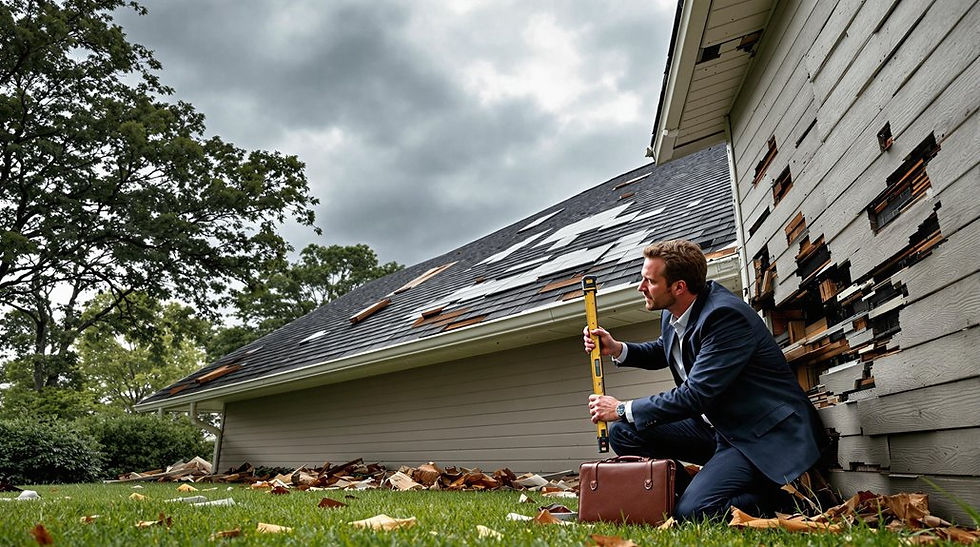
An expert-led approach centers on thorough diagnostics, evidence-backed reporting, and structured claim management. Assessments consider the storm’s direction, wind speed variations, building design, and material vulnerabilities. Rather than relying on superficial inspections, specialists evaluate how the storm affected the property as a complete system.
They also help homeowners understand policy language, coverage limitations, and required documentation. This guidance ensures that the claim process stays on track and that the final settlement reflects the actual cost of restoring the property to pre-storm condition.
🌤️ Ensuring Accurate Compensation After Severe Storm Events
Storm-related losses are often underestimated not because the damage is minor, but because the inspection process fails to capture its full extent. When wind affects a property, the resulting structural changes may be hidden, subtle, or easily overlooked without specialized tools and expertise. Through comprehensive evaluations, evidence-driven documentation, and strategic negotiation, public adjusters help homeowners secure settlements that reflect the real scope of their repair needs.

Benjamin Licht 954-589-8710
Office 954-466-5730
Don’t wait until it’s too late.


Comments